


Laboratory testing of cosmetic products and medical devices
A list of the laboratory tests provided by the testing laboratory for cosmetic products, medical devices and raw materials
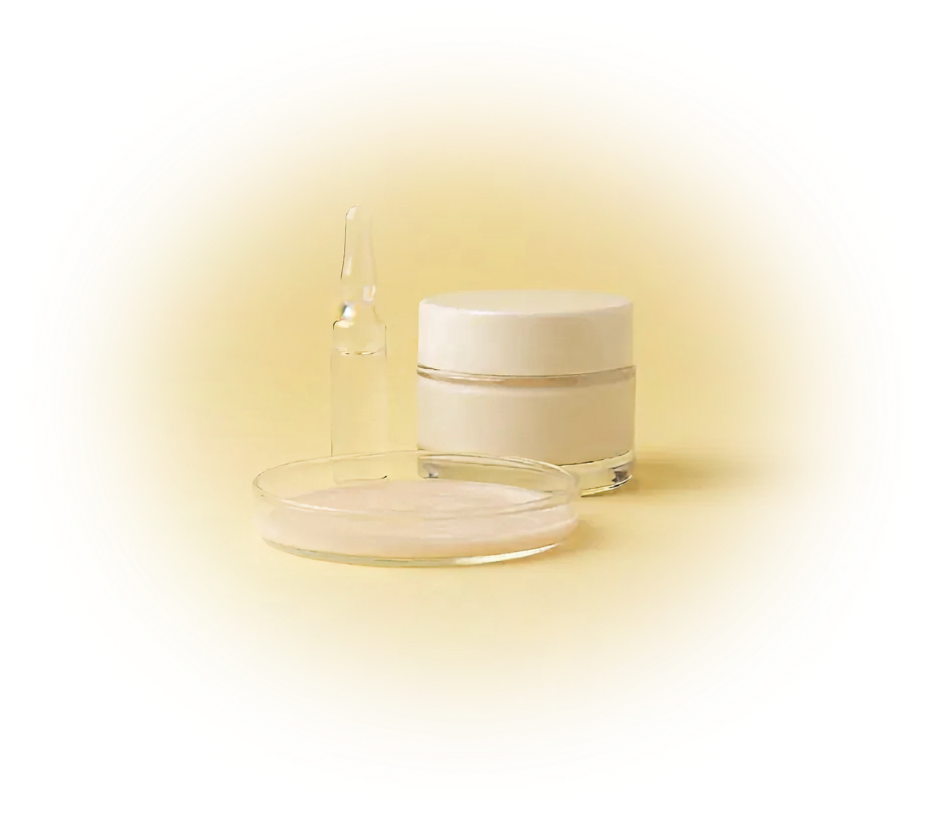
CoLab is a modern testing laboratory in Kyiv specialising in the testing of cosmetic products and raw materials, medical devices, as well as cosmetic products for animals.
Our test reports serve as the basis for regulatory documentation, safety assessment and substantiation of the product's declared properties. We carry out laboratory studies whose results are used to confirm that products comply with the requirements of the technical regulations of Ukraine, the European Union and the United Kingdom and other international markets.
Organoleptic parameters
The laboratory carries out the following types of testing:
Organoleptic parameters are fundamental characteristics of cosmetic products that are assessed at every stage of their life cycle. They play a critically important role both in terms of stability and from the standpoint of safety and consumer perception.
Within laboratory studies, organoleptic parameters are used primarily as indicators of physicochemical and microbiological stability. Provided the formulation is properly developed and storage conditions are appropriate, these characteristics should not change significantly throughout the entire declared shelf life or period after opening (PAO).
Changes in organoleptic characteristics are often the first signs of undesirable processes that may occur in a cosmetic product over time, in particular:
For this reason, the assessment of appearance (homogeneity, the absence of sediment, turbidity or gas formation), colour stability and odour consistency is a mandatory component of accelerated and long-term stability studies.
Physicochemical testing
Physicochemical parameters are key indicators that make it possible to objectively assess quality, the reproducibility of the composition, the stability of the formulation and its conformity with the declared characteristics. Unlike organoleptic parameters, these are expressed quantitatively and provide scientifically grounded product control.
Changes in mass or volume over time may indicate the evaporation of volatile components, a loss of packaging tightness or an undesirable interaction of the product with packaging materials, which is especially relevant for liquid and alcohol-containing forms.
The pH value has a direct impact on safety for the skin and mucous membranes, on the stability of active and auxiliary ingredients and on the effectiveness of the preservative system. Monitoring pH over time makes it possible to detect hydrolysis, oxidation or microbiological degradation processes that may not be immediately apparent organoleptically. For many categories of cosmetic products the permissible pH range is a critical parameter, and exceeding its limits may lead to irritation, reduced effectiveness or loss of product stability.
Viscosity is a parameter that characterises the rheological properties of a cosmetic product and directly affects the ease and uniformity of application, the stability of emulsions, gels and suspensions, and the consumer's perception of product quality. A change in viscosity over time or as a result of temperature fluctuations may indicate the breakdown of structure-forming systems, separation or instability of the formulation.
Determination of the volume fraction of ethyl alcohol is mandatory for products that contain alcohol, in particular perfumes, lotions and toners. This parameter is critically important from the standpoint of the product's antimicrobial efficacy and the stability of the formulation, taking into account the evaporation of alcohol. Monitoring the volume fraction of ethyl alcohol over time makes it possible to assess the tightness of the packaging and to confirm that the concentration of the active component is maintained throughout the entire shelf life.
Microbiological testing
Microbiological testing is a mandatory component of the laboratory control of cosmetic products and is critically important for protecting the consumer's health, confirming the effectiveness of the preservative system and ensuring that products comply with the established regulatory requirements. It makes it possible to assess both the overall level of microbial load and the absence of specific pathogenic microorganisms that are dangerous to humans.
Count of mesophilic aerobic bacteria
Determining the total count of mesophilic aerobic microorganisms is a fundamental indicator of the microbiological quality of a cosmetic product. This parameter reflects the overall sanitary state of production, makes it possible to assess the quality of raw materials and water, and serves as an indicator of the effectiveness of hygiene measures and the preservation system.
Count of yeasts and moulds
Control of yeasts and moulds is especially important for cosmetic products with a high content of water, natural extracts or plant-based raw materials. These microorganisms can cause the product to spoil, lead to changes in odour, colour and consistency, and be a source of potential allergic reactions.
Detection of Escherichia coli
Escherichia coli is an indicator of faecal contamination and gross hygiene violations. Its presence in a cosmetic product is unacceptable, as it indicates critical breaches of sanitary conditions and poses a direct risk to the consumer's health. Testing for the absence of E. coli is mandatory for all cosmetic products without exception.
Detection of Pseudomonas aeruginosa
Pseudomonas aeruginosa is an opportunistic pathogen that is particularly dangerous for products applied to damaged skin, products for children and products for the eye area and mucous membranes. Its ability to survive in aqueous environments and its resistance to many preservatives make the control of this microorganism critically important for assessing the safety of cosmetic products.
Detection of Staphylococcus aureus
Staphylococcus aureus is a common pathogen of human skin and can cause infectious lesions, irritation and inflammatory reactions, as well as complications when cosmetics are applied to damaged skin. The absence of this microorganism confirms an adequate level of production hygiene and the safety of the product for the end consumer.
Detection of Candida albicans
Candida albicans is a yeast-like fungus that can cause infections of the mucous membranes and skin. Control of its absence is especially important for intimate cosmetics, oral-cavity products, products for children and products for sensitive areas. The presence of Candida albicans in a cosmetic product is considered unacceptable and indicates serious risks to the user's safety.
Assessment of the antimicrobial protection of a cosmetic product (challenge test)
Assessment of the antimicrobial protection of a cosmetic product, known as the challenge test, is a specialised laboratory test aimed at confirming the effectiveness of the cosmetic product's preservative system throughout the entire period of its use. This study makes it possible to evaluate the product's ability to withstand the microbial contamination that may occur during normal use by the consumer.
During the challenge test, the cosmetic product is deliberately inoculated with specified strains of microorganisms, after which the reduction in their count is assessed at set time intervals. In this way, the real conditions of product use are simulated, in particular:
The main purpose of the test is to confirm that the preservative system provides reliable and stable microbiological protection throughout the entire declared period after opening or shelf life.
The results of the challenge test are a mandatory part of the body of evidence in the Product Information File (PIF), in accordance with the requirements of the Technical Regulation on Cosmetic Products (CMU Resolution No. 65) and EU Regulation 1223/2009, and form part of the cosmetic product safety report, in particular for substantiating the shelf life and PAO.
Determination of the stability of cosmetic products
Determination of the stability of cosmetic products is a comprehensive process of laboratory studies aimed at confirming that a cosmetic product retains its quality, safety and functional characteristics throughout the entire declared shelf life and/or period after opening (PAO).
The main purpose of stability studies is to detect possible changes in the product's properties over time under the influence of internal and external factors, in particular temperature and temperature fluctuations, light, interaction with the packaging and microbiological processes.
Such studies make it possible to establish the shelf life on a sound basis and to confirm that the product remains safe and suitable for use throughout the entire period of storage and application.
Types of stability studies
In accordance with the recommendations of the standard ДСТУ ISO/TR 18811:2019, stability can be assessed using accelerated studies, which are carried out at elevated temperatures or altered storage conditions in order to predict the product's behaviour over time, and long-term studies, which simulate real storage conditions throughout the entire declared shelf life.
The results of stability studies are an integral part of the safety assessment of cosmetic products in accordance with the requirements of the Technical Regulation on Cosmetic Products (CMU Resolution No. 65) and EU Regulation 1223/2009, and form part of the cosmetic product safety report.
Determination of the compatibility of cosmetic products with the packaging
Determination of the compatibility of cosmetic products with the packaging is an integral component of the comprehensive assessment of a cosmetic product's stability and safety. In accordance with the recommendations of ДСТУ ISO/TR 18811:2019, these studies aim to confirm that the packaging does not have a negative effect on the properties of the cosmetic product and that the product, in turn, does not impair the functional or protective characteristics of the packaging throughout the entire declared shelf life and period after opening (PAO).
The main purpose of the studies is to detect potential physical, chemical or organoleptic changes that may arise from the interaction of the cosmetic product with packaging materials. Such interactions may occur gradually and are not always apparent in the early stages, yet over time they can lead to:
Packaging compatibility studies are usually carried out in parallel with stability studies, both accelerated and long-term. This approach makes it possible to assess the product's behaviour in its final packaging, to confirm that the packaging has been correctly selected for the specific formulation, and to minimise the risks of product changes after it is placed on the market.
The results of packaging compatibility studies are a mandatory part of the safety assessment of cosmetic products in accordance with the requirements of the Technical Regulation on Cosmetic Products (CMU Resolution No. 65) and EU Regulation 1223/2009, and form part of the cosmetic product safety report.
Determination of the period after opening the packaging (PAO)
The Period After Opening (PAO) is a defined interval of time during which a cosmetic product remains safe and suitable for use after the packaging is first opened, under normal and foreseeable conditions of use. The PAO is a critically important element of labelling and a component of the cosmetic product safety assessment. Determination of the PAO is based not on assumptions but on a comprehensive analysis of laboratory and scientific data that reflect the product's actual behaviour after opening.
When the PAO applies
The PAO applies to cosmetic products whose shelf life exceeds 30 months. In such cases, instead of the date of minimum durability, the labelling indicates the open jar symbol with the corresponding numerical value (for example, 6M, 12M, 24M).
Testing and substantiation of claims
Testing and substantiation of claims is a key element of the body of evidence for cosmetic products and is aimed at confirming that the product properties declared on the labelling and in promotional materials (in particular, on the website) are truthful, substantiated and verifiable.
Claims about the properties of a cosmetic product directly influence consumer expectations and purchasing decisions. From a regulatory standpoint, any claim must be truthful and correct, supported by appropriate evidence and not misleading as to the properties or intended purpose of the product. Claims are also subject to the attention of the Antimonopoly Committee of Ukraine (AMCU), which has the right to request evidence for claims as part of a competition-protection investigation.
The results of claims testing are documented in the form of test reports and summaries and are included in the relevant part of the PIF.
Order laboratory testing
The CoLab laboratory is a reliable partner for manufacturers of cosmetic products, medical devices and raw materials in matters of laboratory testing in accordance with the requirements of the technical regulations of Ukraine, the EU and other countries.